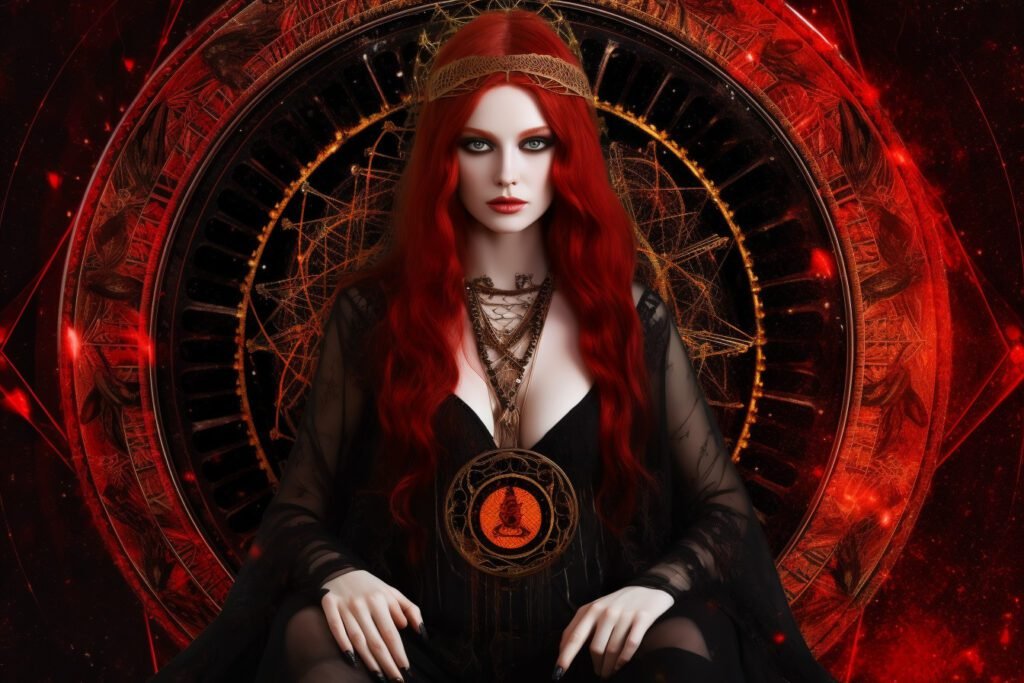
Lilith enters the biblical discussion through Isaiah 34:14 and a difficult Hebrew term whose reception extends far beyond that verse.[1] English translations handle the term in different ways, while the familiar story of Lilith as Adam’s first wife belongs to later Jewish literary tradition. Keeping these layers distinct makes the history of Lilith easier to follow.
Where does Lilith appear in the Bible?
The key passage is Isaiah 34:14, part of a prophetic description of Edom’s devastation. The Hebrew text contains the rare term commonly transliterated lilit; later interpretation connected it with the figure known as Lilith.[1] English versions make the textual difficulty visible: NRSVUE preserves “Lilith,” while NET, NIV and NKJV use differing nocturnal-creature language in the same verse.[2]
Isaiah 34:14 is the biblical textual anchor for the Lilith tradition. The broader figure familiar from later folklore, literature and popular culture developed through centuries of interpretation beyond Isaiah itself.[1]
Why do Bible translations use different words for Lilith?
The rare Hebrew term in Isaiah 34:14 has produced visibly different English renderings. NRSVUE prints “Lilith.” NIV uses “night creatures.” NKJV uses “night creature,” with the underlying Hebrew noted in its apparatus, while NET uses “nocturnal animals” and discusses lexical uncertainty in its note.[2]
These choices affect how readily a reader recognizes Lilith as a named figure. A transliteration preserves the proper-name association; a nocturnal-creature rendering foregrounds the ruined-wilderness imagery of Isaiah.
Was Lilith Adam’s first wife in the Bible?
Genesis contains no named wife called Lilith. The influential first-wife narrative belongs to later Jewish literary tradition. Kosior traces how early rabbinic traditions about Eve inform Lilith’s portrayal in the medieval Alphabet of Ben Sira.[3] Bitton likewise examines the “first Eve” story as a late Jewish myth whose textual history lies beyond Genesis.[4]
For readers asking “who is Lilith in the Bible?”, the textual distinction is central: Isaiah 34:14 supplies the biblical anchor, while the Adam-and-Lilith narrative develops in later reception.
How the later Jewish Lilith tradition developed
Lilith’s meanings changed as literary, protective and interpretive traditions accumulated around the figure. Knippel and Merritt follow this development across ancient material, Jewish tradition and modern reception, including later feminist uses of Lilith as a language of autonomy and empowerment.[1]
This historical development explains why modern readers encounter several Lilith traditions: the biblical term in Isaiah, later female night-demon traditions, Adam’s rebellious first wife, literary symbolism and contemporary cultural reinterpretation.
From biblical Lilith to Black Moon Lilith
Modern astrology uses the Lilith name in another context. Black Moon Lilith commonly refers to a lunar-apogee calculation; Swiss Ephemeris documents the mean lunar apogee as “Lilith, Black Moon in astrology” and distinguishes it from related apogee calculations.[5]
The site’s contemporary Lilith visual archetype study follows a separate cultural layer through direct gaze, self-possession, expressive intensity and sexual self-presentation.
References
- Knippel, Jessi, and Leland Merritt. “Lilith.” The Oxford Handbook of Biblical Monsters, Oxford University Press, 2025, pp. 117–132. DOI: 10.1093/oxfordhb/9780197565056.013.0012. ↩
- Isaiah 34:14 in NRSVUE, NET, NIV and NKJV. Bible Gateway parallel translation comparison. Translation comparison. ↩
- Kosior, Wojciech. “A Tale of Two Sisters: The Image of Eve in Early Rabbinic Literature and Its Influence on the Portrayal of Lilith in the Alphabet of Ben Sira.” Nashim, 2018, 32:112–130. DOI: 10.2979/nashim.32.1.10. ↩
- Bitton, Michèle. “Lilith the First Eve. A Late Jewish Myth.” Archives de Sciences Sociales des Religions, 1990, 71:113–136. DOI: 10.3406/assr.1990.1347. ↩
- Astrodienst. Swiss Ephemeris documentation: Mean Lunar Node and Mean Lunar Apogee (Lilith, Black Moon in astrology). Official documentation. ↩
Explore Black Moon Lilith in astrology.